Search Results
Subject is exactly
Abstraction
Use buttons below to view additional pages.
-
Efigie, portador de una alma, I
title Efigie, portador de una alma, Idescription This print is from the Dream Series. The image is influenced by the artist's research on shamanism and recurring dreams of trying to heal her sister. The central image is chacmool. Monoprint on Italia paper. Dimensions of the image: 11 ½" x 16 ¾"artist/creator Barraza, Santasubject Chicana art Chacmool Mystery Dreams Abstraction Prints Tejana art Curanderismo Collective memories Duality Ducks Healing Memories Olmec Suncontributor Santa C. Barraza -
Efigie, portador de una alma, II
title Efigie, portador de una alma, IIdescription This print is from the Dream Series. In the dream the artist saw a curandero holding the chacmool with a duck on its belly, which he will use to retrieve the artist’s sister's lost soul from the Underworld. Later, Santa Barraza learned at the exhibition, The Road to Aztlan: Art of the Mythic Homeland, that the duck of her dreams resembles an ancient Mesoamerican ceramic, likely Olmec. Monoprint. Dimensions of the image: 11 ¾" x 16 ¾"artist/creator Barraza, Santasubject Chacmool Ducks Dreams Healing Collective memories Olmec Sun Duality Tejana art Chicana art Curanderismo Prints Abstraction Mysterycontributor Santa C. Barraza -
Efigie, portador de una alma, III
title Efigie, portador de una alma, IIIdescription This print is from the Dream Series. In the dream the artist saw a curandero holding the chacmool with a duck on its belly, which he will use to retrieve the artist’s sister's lost soul from the Underworld. Later, Santa Barraza learned at the exhibition, The Road to Aztlan: Art of the Mythic Homeland, that the duck of her dreams resembles an ancient Mesoamerican ceramic, likely Olmec. Monoprint. Dimensions of the image: 11 ¾" x 16 ¾"artist/creator Barraza, Santasubject Chacmool Ducks Dreams Healing Collective memories Olmec Sun Duality Tejana art Chicana art Curanderismo Abstraction Mystery Printscontributor Santa C. Barraza -
Figurative Composition
title Figurative Compositiondescription The painting was created as a class project focusing on modular style. Here, the artist used a human figure which was then abstracted. She also used this assignment to challenge her use of color. Acrylic on canvas. Dimensions: 48" x 32"artist/creator Barraza, Santasubject Paintings Figurative art Abstraction Chicana art Tejana art Concentric patterns Nudes in artcontributor Santa C. Barraza -
Mi Duende Teasing Me
title Mi Duende Teasing Medescription This print is from the Dream Series. The nude figure holds the steps to the Underworld on her vulva, and the hair on her head is energized with movement. Monoprint. Dimensions: 22" x 28"artist/creator Barraza, Santacontributor Santa C. Barraza -
Las Soldaderas Jovenes
title Las Soldaderas Jovenesdescription Influenced by Las Adelitas of the Mexican Revolution, the artist created this etching using her daughter as the model. The composition of the figures is a visual quotation of a photograph by Agustín Víctor Casasola (1874-1938). Techniques of burnishing, scrapping, rosin, soft ground, mezzotint, dry point, and aquatint are visible throughout the image. Etching. Dimensions: 23" x 17 ¾”artist/creator Barraza, Santacontributor Santa C. Barraza -
Ollin Rotunda Mural Prototype I Painting
title Ollin Rotunda Mural Prototype I Paintingdescription This painting is the selected prototype for the Ollin Rotunda Mural at the University of Texas, San Antonio. Satisfying the requirements of the commission, the design conveys three components: Texas history, Indigenous history, and science. The central image is the ollin symbol, an ancient Aztec hieroglyph heralding movement and change. It is surrounded by the seven caves, Chicomoztoc, the place of Aztec origins as depicted in the codices. The composition of the seven caves also resembles an abstracted rendering of the dendrites in the human brain. The blue field contains neurons and engrams of the brain. For the scientists who selected the artist's design, the dotted patterns on the surface of the blue field resemble DNA. The concept for the ochre yellow band is derived from ancient Indigenous pictographs at Monte Albán and Maya disks used in the ball courts. This final outer ring includes symbols that represent the Pecos River area that borders Texas and Mexico. The colors are inspired by multiple sources, including colors of the Maya manuscript known as the Dresden Codex and ceramics from colonial Puebla, Mexico. Acrylic on canvas. Dimensions: 20" x 20"artist/creator Barraza, Santasubject Paintings Chicana art Tejana art Indigeneity Hieroglyphs Ollin Chicomoztoc Science Symbols Borderlands Frontera Texas--Pecos River Human body Abstraction Appropriation Color Production process Mural art Texas--San Antonio Maps Caves Postmodernismcontributor Santa C. Barraza -
Ollin Rotunda Mural Prototype II Painting
title Ollin Rotunda Mural Prototype II Paintingdescription This painting was the second prototype for the Ollin Rotunda Mural at the University of Texas, San Antonio. Tonalli, or spirit, is the central symbol, and the water symbol from Mesoamerican art surrounds the seven caves, Chicomoztoc, the place of Aztec origins as depicted in the codices. Pictographs embellish the outer circle. Acrylic on canvas. Dimensions: 20" x 20"artist/creator Barraza, Santasubject Paintings Chicana art Tejana art Indigeneity Hieroglyphs Ollin Chicomoztoc Science Symbols Borderlands Frontera Texas--Pecos River Human body Abstraction Appropriation Color Production process Mural art Texas--San Antonio Maps Caves Postmodernismcontributor Santa C. Barraza -
Ollin Rotunda Mural, view 1
title Ollin Rotunda Mural, view 1description The Ollin Rotunda Mural, located at the University of Texas, San Antonio, satisfies the requirements of the commission with three components: Texas history, Indigenous history, and science. The central image is the ollin symbol, the Aztec hieroglyph indicating movement and change. It is surrounded by the seven caves, Chicomoztoc, the place of Aztec origins as depicted in the codices. The composition of the seven caves also resembles an abstracted rendering of the dendrites in the human brain. The blue section contains neurons and engrams of the brain. For the scientists who selected the artist's design, the dotted patterns on the surface of the blue field resemble DNA. The concept for the ochre yellow band is derived from ancient Indigenous pictographs at Monte Albán and Maya disks used in the ball courts. This final outer ring includes symbols representing the Pecos River area that borders Texas and Mexico. The colors are inspired by multiple sources, including colors of the Maya manuscript known as the Dresden Codex and ceramics from colonial Puebla, Mexico. Alice Adams (b. 1930) designed the fountain below the mural. Acrylic emulsion on plaster. Dimensions: 43' in diameter.artist/creator Barraza, Santasubject Murals Chicana art Tejana art Indigeneity Hieroglyphs Ollin Chicomoztoc Science Symbols Borderlands Frontera Texas--Pecos River Human body Abstraction Appropriation Color Mural art Texas--San Antonio Caves Maps Postmodernismcontributor Santa C. Barraza -
Ollin Rotunda Mural, view 2
title Ollin Rotunda Mural, view 2description The Ollin Rotunda Mural, located at the University of Texas, San Antonio, satisfies the requirements of the commission with three components: Texas history, Indigenous history, and science. The central image is the ollin symbol, the Aztec hieroglyph indicating movement and change. It is surrounded by the seven caves, Chicomoztoc, the place of Aztec origins as depicted in the codices. The composition of the seven caves also resembles an abstracted rendering of the dendrites in the human brain. The blue section contains neurons and engrams of the brain. For the scientists who selected the artist's design, the dotted patterns on the surface of the blue field resemble DNA. The concept for the ochre yellow band is derived from ancient Indigenous pictographs at Monte Albán and Maya disks used in the ball courts. This final outer ring includes symbols representing the Pecos River area that borders Texas and Mexico. The colors are inspired by multiple sources, including colors of the Maya manuscript known as the Dresden Codex and colonial ceramics from Puebla, Mexico. This photograph conveys the accurate color scheme of the mural. Acrylic emulsion on plaster. Dimensions: 43' in diameter.artist/creator Barraza, Santasubject Murals Chicana art Tejana art Indigeneity Hieroglyphs Ollin Chicomoztoc Science Symbols Borderlands Frontera Texas--Pecos River Human body Abstraction Appropriation Color Mural art Texas--San Antonio Maps Caves Postmodernismcontributor Santa C. Barraza -
Ollin Rotunda Mural Drawing
title Ollin Rotunda Mural Drawingdescription This preparatory drawing for the Ollin Rotunda Mural at the University of Texas, San Antonio conveys each of the requirements noted in the call for proposals: Texas history, Indigenous history, and science. The central image is the ollin symbol, the Aztec hieroglyph indicating movement and change. It is surrounded by the seven caves, Chicomoztoc, the place of Aztec origins as depicted in the codices. The design of the seven caves also resembles an abstracted rendering of the human dendrites. The field surrounding the seven caves contains neurons and engrams of the brains. The final outer ring includes symbols representing the Pecos River area that borders Texas and Mexico. Pencil and ink on paper. Dimensions: 16" x 16"artist/creator Barraza, Santasubject Murals Chicana art Tejana art Indigeneity Hieroglyphs Ollin Chicomoztoc Science Symbols Borderlands Frontera Texas--Pecos River Human body Abstraction Appropriation Production process Mural art Texas--San Antonio Maps Caves Drawings Postmodernismcontributor Santa C. Barraza -
Sombras
title Sombrasdescription Oil on canvas / óleo sobre lienzo. 48" x 24".artist/creator Ortiz, Luissubject Abstractioncontributor National Museum of Mexican Art (NMMA) -
Ruben
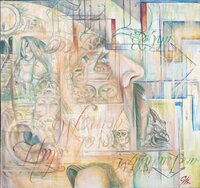
title Rubendescription Acrylic on canvas, 37.5 in. x 36 in. A collage of images and cursive letters with ghostly female faces. The background image is a man with black hair and a mustache.artist/creator Casas, Victor "Mask"subject Abstraction Borderlands Frontera Portraits Acrylic Paintings Life and Experiences in the U.S./Mexico Borderlands (exhibition)contributor Mexic-Arte Museum (MAM) -
Danny
title Dannydescription Acrylic on canvas, 36 in. x 37.5 in. A collage of images and cursive writing including a Pope, Mesoamerican imagery, and women. The background is the profile of bald man with a mustache.artist/creator Casas, Victor "Mask"subject Abstraction Borderlands Frontera Acrylic Paintings Life and Experiences in the U.S./Mexico Borderlands (exhibition)contributor Mexic-Arte Museum (MAM) -
[There are no aspects of the prodigy in me...]
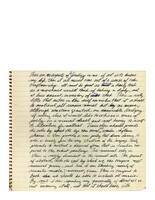
title [There are no aspects of the prodigy in me...]description Interested in reading more? Visit our partner's homepage by clicking on the 'View Item' button or visiting the url in the website sectionartist/creator Almaraz, Carlos -
Blue Granite Shift
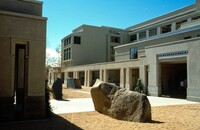
title Blue Granite Shiftdescription California Center for the Arts Museum (Escondido, Calif.) For inSITE94, Mathieu Gregoire created a permanent installation for the central courtyard of the California Center for the Arts, Escondido. Entitled "Blue Granite Shift/Transición del granite azul," the piece is made of granite quarried from the hills surrounding the cultural complex. Extending 500 feet throughout the courtyard, the work moves from rough granite boulders to increasingly more cut and polished stones, finally ending with completely square granite elements. Likewise, the landscaping follows a similar evolution from native plants and trees to more formal and decorative varieties. The work suggests development in the area as having been wrought from the natural environment. --inSITE94 Garden and Landscape Sculpture and Installations Special Collections & Archives, UC San Diego, La Jolla, 92093-0175 (https://lib.ucsd.edu/sca) This image is a scan of a 35mm color slide from the InSite Archive (MSS 707, Box 309, Folder 05, Item 131) [Title, Date]. InSite Archive. MSS 707. Special Collections & Archives, UC San Diego.artist/creator Gregoire, Mathieusubject Landscape Architecture Abstraction Orchards Sculpture (Visual Work) Escondido (Calif.) Mexican-American Border Region Landscapes (Environments) Insite94 Installations (Visual Works) Gardenscontributor Calisphere -
Blue Granite Shift
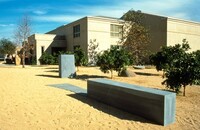
title Blue Granite Shiftdescription California Center for the Arts Museum (Escondido, Calif.) For inSITE94, Mathieu Gregoire created a permanent installation for the central courtyard of the California Center for the Arts, Escondido. Entitled "Blue Granite Shift/Transición del granite azul," the piece is made of granite quarried from the hills surrounding the cultural complex. Extending 500 feet throughout the courtyard, the work moves from rough granite boulders to increasingly more cut and polished stones, finally ending with completely square granite elements. Likewise, the landscaping follows a similar evolution from native plants and trees to more formal and decorative varieties. The work suggests development in the area as having been wrought from the natural environment. --inSITE94 Garden and Landscape Sculpture and Installations Special Collections & Archives, UC San Diego, La Jolla, 92093-0175 (https://lib.ucsd.edu/sca) This image is a scan of a 35mm color slide from the InSite Archive (MSS 707, Box 309, Folder 05, Item 132) [Title, Date]. InSite Archive. MSS 707. Special Collections & Archives, UC San Diego.artist/creator Gregoire, Mathieusubject Landscape Architecture Abstraction Orchards Sculpture (Visual Work) Escondido (Calif.) Mexican-American Border Region Landscapes (Environments) Insite94 Installations (Visual Works) Gardenscontributor Calisphere -
Blue Granite Shift
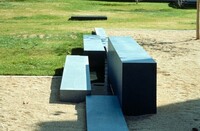
title Blue Granite Shiftdescription California Center for the Arts Museum (Escondido, Calif.) For inSITE94, Mathieu Gregoire created a permanent installation for the central courtyard of the California Center for the Arts, Escondido. Entitled "Blue Granite Shift/Transición del granite azul," the piece is made of granite quarried from the hills surrounding the cultural complex. Extending 500 feet throughout the courtyard, the work moves from rough granite boulders to increasingly more cut and polished stones, finally ending with completely square granite elements. Likewise, the landscaping follows a similar evolution from native plants and trees to more formal and decorative varieties. The work suggests development in the area as having been wrought from the natural environment. --inSITE94 Garden and Landscape Sculpture and Installations Special Collections & Archives, UC San Diego, La Jolla, 92093-0175 (https://lib.ucsd.edu/sca) This image is a scan of a 35mm color slide from the InSite Archive (MSS 707, Box 309, Folder 05, Item 133) [Title, Date]. InSite Archive. MSS 707. Special Collections & Archives, UC San Diego.artist/creator Gregoire, Mathieusubject Landscape Architecture Abstraction Orchards Sculpture (Visual Work) Escondido (Calif.) Mexican-American Border Region Landscapes (Environments) Insite94 Installations (Visual Works) Gardenscontributor Calisphere -
Birth
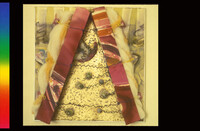
title Birthdescription A piece of handmade paper serves as the base for this sculpture. On it are placed two pink rectangular prisms arranged to form the shape of a capital lambda. The resulting triangle in the center is white. Wool is bound to the outside of these prisms with coiled wire. Call Number: Box 09, folder 04, slide 01 The artist of any work retains all rights to that work. Copyright has not been assigned to the Regents of the University of California. The copyright law of the United States (Title 17, United States Code) governs the making of photocopies or other reproductions of copyrighted material. Under certain conditions specified in the law, libraries and archives are authorized to furnish a photocopy or other reproduction. One of these specified conditions is that the photocopy or reproduction is not to be "used for any purpose other than private study, scholarship, or research." If a user makes a request for, or later uses, a photocopy or reproduction for purposes in excess of "fair use," that user may be liable for copyright infringement. No further reproduction is permitted without prior written permission by the artist or copyright holder. Any requests for permission to reproduce this piece must be directed to: Linda Vallejo c/o California Ethnic and Multicultural Archives, Library – CEMA, University of California, Santa Barbara 93106 Phone: (805) 893-8563 E-mail: cema@library.ucsb.edu E-mail: vallejo@earthlink.net Web: www.lindavallejo.comartist/creator Vallejo, Lindasubject Art, Abstract Chicana Art Sculpture Chicana feminism Monotypes Abstraction Abstracts Feminism Electric wires Womb Fetus Birth Mixed Mediacontributor Calisphere