Search Results
Subject is exactly
Science
Use buttons below to view additional pages.
-
Retablo Codex Mural, frame design
title Retablo Codex Mural, frame designdescription This drawing is the design for Retablo Codex Mural's frame, constructed of metal, at the University of Texas, San Antonio. Each compartment contains a motif of Mesoamerican hieroglyphs. The frame imitates a colonial tin retablo with rounded corners and sacred imagery. The date of the mural is written in Mayan hieroglyphs in the lower right corner. The frame is constructed of aluminum with embossing. Ink on vellum. Dimensions: 11 ¼" x 18"artist/creator Barraza, Santasubject Maya Hieroglyphs Drawings Chicana art Tejana art Retablo Codex Mural Mural art Indigeneity Texas--San Antonio Science Sun raycontributor Santa C. Barraza -
Retablo Codex Mural, detail 1
title Retablo Codex Mural, detail 1description In this detail of the final section of the Retablo Codex Mural in the Biosciences Building at University of Texas, San Antonio, the artist combines scientific and Mesoamerican symbols. The mural is a codex and read from right to left in the Mixtec style and includes red bars that guide the reader's eye. Industrial paint on metal with aluminum frame. Dimensions: 7' x 11 ½'artist/creator Barraza, Santasubject Chicana art Tejana art Mixtecs Science Mural art Retablo Codex Mural Texas--San Antonio Indigeneity Appropriation Metal Murals Postmodernismcontributor Santa C. Barraza -
Retablo Codex Mural, detail 2
title Retablo Codex Mural, detail 2description This detail of the Retablo Codex Mural in the Biosciences Building at University of Texas, San Antonio, emphasizes motifs appropriated from codices, renderings of the human brain, and medical images created by the scientists working in the building. The mural is a codex and read from right to left in the Mixtec style and includes red bars that guide the reader's eye. This section merges Indigenous iconography with scientific images. Industrial paint on metal without the aluminum frame. Dimensions: 7' x 11 ½'artist/creator Barraza, Santasubject Mural art Chicana art Tejana art Texas--San Antonio Codices Science Mixtecs Indigeneity Retablo Codex Mural Appropriation Metal Murals Postmodernismcontributor Santa C. Barraza -
Retablo Codex Mural
title Retablo Codex Muraldescription This image depicts the Retablo Codex Mural at University of Texas, San Antonio, located on the second floor of a curved wall in the Biosciences Building. The motifs are appropriated from codices, renderings of the human brain, and medical images created by the scientists working in the building. The frame imitates a colonial tin retablo with embossing, rounded corners, and sacred and scientific imagery. The mural is a codex and read from right to left in the Mixtec style and includes red bars that guide the reader's eye. Industrial paint on metal with aluminum frame. Overall dimensions, 7' x 11 ½ ' and dimensions of the painting, 6' x 10 ½'artist/creator Barraza, Santasubject Codices Murals Chicana art Tejana art Mural art Retablos Metal Appropriation Science Texas--San Antonio Indigeneity Mixtecs Postmodernismcontributor Santa C. Barraza -
Ollin Rotunda Mural Prototype I Painting
title Ollin Rotunda Mural Prototype I Paintingdescription This painting is the selected prototype for the Ollin Rotunda Mural at the University of Texas, San Antonio. Satisfying the requirements of the commission, the design conveys three components: Texas history, Indigenous history, and science. The central image is the ollin symbol, an ancient Aztec hieroglyph heralding movement and change. It is surrounded by the seven caves, Chicomoztoc, the place of Aztec origins as depicted in the codices. The composition of the seven caves also resembles an abstracted rendering of the dendrites in the human brain. The blue field contains neurons and engrams of the brain. For the scientists who selected the artist's design, the dotted patterns on the surface of the blue field resemble DNA. The concept for the ochre yellow band is derived from ancient Indigenous pictographs at Monte Albán and Maya disks used in the ball courts. This final outer ring includes symbols that represent the Pecos River area that borders Texas and Mexico. The colors are inspired by multiple sources, including colors of the Maya manuscript known as the Dresden Codex and ceramics from colonial Puebla, Mexico. Acrylic on canvas. Dimensions: 20" x 20"artist/creator Barraza, Santasubject Paintings Chicana art Tejana art Indigeneity Hieroglyphs Ollin Chicomoztoc Science Symbols Borderlands Frontera Texas--Pecos River Human body Abstraction Appropriation Color Production process Mural art Texas--San Antonio Maps Caves Postmodernismcontributor Santa C. Barraza -
Ollin Rotunda Mural Prototype II Painting
title Ollin Rotunda Mural Prototype II Paintingdescription This painting was the second prototype for the Ollin Rotunda Mural at the University of Texas, San Antonio. Tonalli, or spirit, is the central symbol, and the water symbol from Mesoamerican art surrounds the seven caves, Chicomoztoc, the place of Aztec origins as depicted in the codices. Pictographs embellish the outer circle. Acrylic on canvas. Dimensions: 20" x 20"artist/creator Barraza, Santasubject Paintings Chicana art Tejana art Indigeneity Hieroglyphs Ollin Chicomoztoc Science Symbols Borderlands Frontera Texas--Pecos River Human body Abstraction Appropriation Color Production process Mural art Texas--San Antonio Maps Caves Postmodernismcontributor Santa C. Barraza -
Ollin Rotunda Mural, view 1
title Ollin Rotunda Mural, view 1description The Ollin Rotunda Mural, located at the University of Texas, San Antonio, satisfies the requirements of the commission with three components: Texas history, Indigenous history, and science. The central image is the ollin symbol, the Aztec hieroglyph indicating movement and change. It is surrounded by the seven caves, Chicomoztoc, the place of Aztec origins as depicted in the codices. The composition of the seven caves also resembles an abstracted rendering of the dendrites in the human brain. The blue section contains neurons and engrams of the brain. For the scientists who selected the artist's design, the dotted patterns on the surface of the blue field resemble DNA. The concept for the ochre yellow band is derived from ancient Indigenous pictographs at Monte Albán and Maya disks used in the ball courts. This final outer ring includes symbols representing the Pecos River area that borders Texas and Mexico. The colors are inspired by multiple sources, including colors of the Maya manuscript known as the Dresden Codex and ceramics from colonial Puebla, Mexico. Alice Adams (b. 1930) designed the fountain below the mural. Acrylic emulsion on plaster. Dimensions: 43' in diameter.artist/creator Barraza, Santasubject Murals Chicana art Tejana art Indigeneity Hieroglyphs Ollin Chicomoztoc Science Symbols Borderlands Frontera Texas--Pecos River Human body Abstraction Appropriation Color Mural art Texas--San Antonio Caves Maps Postmodernismcontributor Santa C. Barraza -
Ollin Rotunda Mural, view 2
title Ollin Rotunda Mural, view 2description The Ollin Rotunda Mural, located at the University of Texas, San Antonio, satisfies the requirements of the commission with three components: Texas history, Indigenous history, and science. The central image is the ollin symbol, the Aztec hieroglyph indicating movement and change. It is surrounded by the seven caves, Chicomoztoc, the place of Aztec origins as depicted in the codices. The composition of the seven caves also resembles an abstracted rendering of the dendrites in the human brain. The blue section contains neurons and engrams of the brain. For the scientists who selected the artist's design, the dotted patterns on the surface of the blue field resemble DNA. The concept for the ochre yellow band is derived from ancient Indigenous pictographs at Monte Albán and Maya disks used in the ball courts. This final outer ring includes symbols representing the Pecos River area that borders Texas and Mexico. The colors are inspired by multiple sources, including colors of the Maya manuscript known as the Dresden Codex and colonial ceramics from Puebla, Mexico. This photograph conveys the accurate color scheme of the mural. Acrylic emulsion on plaster. Dimensions: 43' in diameter.artist/creator Barraza, Santasubject Murals Chicana art Tejana art Indigeneity Hieroglyphs Ollin Chicomoztoc Science Symbols Borderlands Frontera Texas--Pecos River Human body Abstraction Appropriation Color Mural art Texas--San Antonio Maps Caves Postmodernismcontributor Santa C. Barraza -
Ollin Rotunda Mural Drawing
title Ollin Rotunda Mural Drawingdescription This preparatory drawing for the Ollin Rotunda Mural at the University of Texas, San Antonio conveys each of the requirements noted in the call for proposals: Texas history, Indigenous history, and science. The central image is the ollin symbol, the Aztec hieroglyph indicating movement and change. It is surrounded by the seven caves, Chicomoztoc, the place of Aztec origins as depicted in the codices. The design of the seven caves also resembles an abstracted rendering of the human dendrites. The field surrounding the seven caves contains neurons and engrams of the brains. The final outer ring includes symbols representing the Pecos River area that borders Texas and Mexico. Pencil and ink on paper. Dimensions: 16" x 16"artist/creator Barraza, Santasubject Murals Chicana art Tejana art Indigeneity Hieroglyphs Ollin Chicomoztoc Science Symbols Borderlands Frontera Texas--Pecos River Human body Abstraction Appropriation Production process Mural art Texas--San Antonio Maps Caves Drawings Postmodernismcontributor Santa C. Barraza -
Advancements Of Man
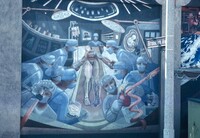
title Advancements Of Mandescription 2331 East Cesar E Chavez Avenue (formerly Brooklyn Avenue) Digital Library Development Program, UC San Diego, La Jolla, 92093-0175 (https://lib.ucsd.edu/digital-library) East Los Angeles (California) Paintings Self-portrait by Kahlo, Frida (Mexican painter, 1907-1954). Photograph by Cinewest, 1979 The positive and negative aspects of science and technology.subject Science Mexican American Art Mural Painting And Decoration Surgeons Technology Operating Rooms Jesus Christcontributor Calisphere -
Advancements Of Man
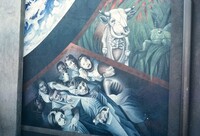
title Advancements Of Mandescription 2331 East Cesar E Chavez Avenue (formerly Brooklyn Avenue) Digital Library Development Program, UC San Diego, La Jolla, 92093-0175 (https://lib.ucsd.edu/digital-library) East Los Angeles (California) Paintings Photograph by Cinewest, 1979 The positive and negative aspects of science and technology.contributor Calisphere -
Santa Ana: General View
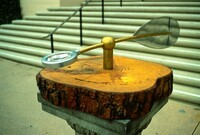
title Santa Ana: General Viewdescription San Diego Natural History Museum San Diego-based artist Roman de Salvo created four distinct installations for inSITE94 at the San Diego Natural History Museum. Titled "Rain Bow/Arco de lluvia," "Santa Ana," "Exits/Salidas," and "Mouse Hole/Ratonera," respectively, the pieces were located in areas of the museum not normally used for exhibition. Drawing attention to the marginal with a certain measure of wit, de Salvo's minimal yet rich interjections invited visitors to contemplate freely, without detailed exposition from the artist. Sculpture and Installations Special Collections & Archives, UC San Diego, La Jolla, 92093-0175 (https://lib.ucsd.edu/sca) This image is a scan of a 35mm color slide from the InSite Archive (MSS 707, Box 309, Folder 03, Item 085) [Title, Date]. InSite Archive. MSS 707. Special Collections & Archives, UC San Diego.artist/creator Salvo, Roman Desubject Science Optics Sunlight Sculpture (Visual Work) Mexican-American Border Region Light (Energy) Insite94 Nature Installations (Visual Works) Sundials Science Museumscontributor Calisphere -
Santa Ana: Detail With Magnifying Glass Burning The Wooden Base
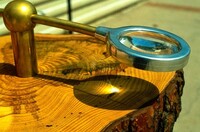
title Santa Ana: Detail With Magnifying Glass Burning The Wooden Basedescription San Diego Natural History Museum San Diego-based artist Roman de Salvo created four distinct installations for inSITE94 at the San Diego Natural History Museum. Titled "Rain Bow/Arco de lluvia," "Santa Ana," "Exits/Salidas," and "Mouse Hole/Ratonera," respectively, the pieces were located in areas of the museum not normally used for exhibition. Drawing attention to the marginal with a certain measure of wit, de Salvo's minimal yet rich interjections invited visitors to contemplate freely, without detailed exposition from the artist. Sculpture and Installations Special Collections & Archives, UC San Diego, La Jolla, 92093-0175 (https://lib.ucsd.edu/sca) This image is a scan of a 35mm color slide from the InSite Archive (MSS 707, Box 309, Folder 03, Item 086) [Title, Date]. InSite Archive. MSS 707. Special Collections & Archives, UC San Diego.artist/creator Salvo, Roman Desubject Science Optics Sunlight Sculpture (Visual Work) Mexican-American Border Region Light (Energy) Insite94 Nature Installations (Visual Works) Sundials Science Museumscontributor Calisphere