Search Results
Subject is exactly
Tattoos
Use buttons below to view additional pages.
-
Codex de La Llorona de la Diosa de Maize
title Codex de La Llorona de la Diosa de Maizedescription From the Codex Series, the artist visualizes a story that she learned from her mother. La Llorona emerges from the maguey which has a fetus. The diosa stands behind a corn plant, appropriated from a codex. Among the icons associated with La Llorona and the Corn Goddess are corn, cacao, water, a fetus, plants, a fertility symbol, and the sundial. Marble dust sourced from Mexico is used to create texture. Acrylic on canvas. Dimensions: 39 ¾" x 43 ½"artist/creator Barraza, Santasubject Calendar art Feminism Chicana art Tejana art Symbols Appropriation Hieroglyphs Codices Postmodernism La Llorona Maguey Corn goddess Indigeneity Landscapes Maiz Nudes in art Paintings Sun ray Tattoos Tonallicontributor Santa C. Barraza -
Cihauteteo con Coyolxauhqui y St. Philomena
title Cihauteteo con Coyolxauhqui y St. Philomenadescription From the Mujeres Nobles Series, the artist printed her serigraph onto canvas and attached the image onto another canvas, on which she painted a house and other elements around the collage. The healing tree and cloud locate the artist in South Texas. The ollin hieroglyph appears in the foundation of the shotgun style house, an architectural style well-known in Texas. St. Philomena, the child martyr, appears above the home to safeguard it. Multimedia. Dimensions: 60" x 50”artist/creator Barraza, Santasubject Yellow Rose of Texas Occupied America Oztotl glyph Atlatl dart Coyolxauhqui (Aztec deity) La Llorona Chicana art Tejana art Borderlands Conquest Feminism Frontera Hieroglyphs Maguey Nudes in art Paintings Roses Symbols Tattooscontributor Santa C. Barraza -
La Llorona II
title La Llorona IIdescription The monumental painting depicts La Llorona in occupied America, as indicated by the cave hieroglyph, oztotl, pierced by the atlatl dart. The maguey gives energy and life to La Llorona. The composition of the water in the background is informed by the artist's study of the Mesoamerican codices. Oil on canvas. Dimensions: 48" x 87"artist/creator Barraza, Santasubject La Llorona Maguey Water Landscapes Tattoos Codices Oztotl glyph Sacred Hearts Corazón sagrado Conquest Atlatl dart Symbols Hieroglyphs Nepantla Indigeneity Genesis Nudes in art Chicana art Tejana art Occupied America Borderlands Frontera Paintings Roses Yellow Rose of Texascontributor Santa C. Barraza -
Las Mujeres de las Americas
title Las Mujeres de las Americasdescription The artist was invited to create a print at Talleres del Centro Cultural Antiguo Colegio Jesuita, in Pátzcuaro, Michoacán, in preparation for the exhibition, Blanco y Negro at the Museo Nacional de la Estampa in Mexico City. She created this image to honor the women in her life. Guadalupe, the central image, represents mestizaje, empowerment, and the Americas. The other figures from left to right are the goddess Coyolxauhqui, the artist's mother, her grandmother, and Petra Vela de Vidal Kenedy (1823-1885), the matriarch of the Kenedy Ranch in Sarita, Texas. Coyolxauhqui wears Coatlicue's necklace of hearts and hands. Nopales and the green jay locate the artist in South Texas. Etching on copper. Dimensions of image: 24" x 38 ¾”artist/creator Barraza, Santasubject Birds Families Symbols Talisman Chicana art Feminism Portraits Coyolxauhqui (Aztec deity) Nepantla Hieroglyphs Maguey Tejana art Codices South Texas Roses Abuelas Mestizaje Artist proofs Tattoos Matriarchy Kenedy, Petra Vela de Vidal (1823-1885) Contreras, Andrea Lopez Barraza, Frances Contreras Doves Holy Spirit Ollin Prints Guadalupe, Our Lady of Tonantzin Virgen de Guadalupecontributor Santa C. Barraza -
Mujeres de Nepantla
title Mujeres de Nepantladescription This painting was created during a residency of the Nepantla Project organized by Gloria E. Anzaldúa (1942-2004) in Saratoga, California. The central image is La Llorona, who emerges from the water and from the cipactli, the crocodile. Shells, fish, and Coyolxauhqui's body parts float in the water, and the profile of her face appears in the moon. The tattoos on the two faces of La Llorona are appropriated from the codices. The soul of the fetus that she carries rises behind her. On the left, Malinche emerges from the maguey, and on the right, the artist's grandmother, Andrea, appears with a javelina, which locates the artist in South Texas. Other symbols are the butterfly, the hummingbirds, and the double-headed horse, appropriated from José Clemente Orozco. Oil on canvas. Dimensions: 63" x 72"artist/creator Barraza, Santasubject Chicana art Feminism Coyolxauhqui (Aztec deity) Nepantla Symbols Hieroglyphs Hummingbirds Maguey Javelina Paintings Tejana art La Llorona Tattoos Codices South Texas Butterflies Visual quotation Abuelas Mestizaje Malinche Moon Duality Indigeneity Nudes in art Portraits Rabbitscontributor Santa C. Barraza -
Teotl
title Teotldescription This drawing was created during a residency of the Nepantla Project organized by Gloria E. Anzaldúa (1942-2004) in Saratoga, California. The artist reimagines Michelangelo's representation of the Creation of Man as portrayed in the Sistine Chapel. Rather than God touching Adam to bestow life force, the artist presents a feminist and Indigenous moment of creation. The central image is La Llorona, whose face has tattoos that signify death, and thus infinity, as she emerges from the maguey. Coyolxauhqui's hand reaches down from a cloud and touches the maguey, which animates La Llorona, giving her life. Rain drops depicted as the Eye of God nourish the earth and prepare the soil for harvest. The outer band produced in acrylic paint contains symbols of South Texas, hieroglyphs, and parts of the Moon Goddess's body. Charcoal drawing and acrylic on canvas. Dimensions: 112" x 74"artist/creator Barraza, Santasubject Drawings Tattoos Maguey Coyolxauhqui (Aztec deity) Codices Oztotl glyph Rabbits Moon Eye of God Ojo de Dios Conquest Atlatl dart Symbols Hieroglyphs Nepantla Indigeneity Genesis Nudes in art Landscapes Chicana art Tejana art Borderlands Feminism Flint Frontera Occupied America Ollin Roses Serpents in artcontributor Santa C. Barraza -
Pasión
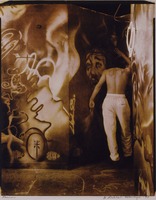
title Pasióndescription Delilah Montoya, Pasión, 1993, collotype, Smithsonian American Art Museum, Museum purchase through the Horace W. Goldsmith Foundation, 1998.88.1, © 1993, Delilah Montoyaartist/creator Montoya, Delilahcontributor Smithsonian American Art Museum (SAAM) -
Painting by Vincent Valdez
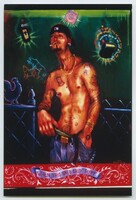
title Painting by Vincent Valdezdescription Painting of a shirtless male, with numerous tattoos, jewelry, and piercings on his body. The man has his hand in his pocket and is smoking a cigarette; the caption at the bottom reads: "When This Vato Said 'Supp'."subject Museum Exhibits -- Texas -- Austin -- Photographs. Artists Exhibitions Artworks Vatos Tattoos Art Exhibits Arts And Crafts - Paintings Mexic-Arte Museum (Austin, Tex.) Arts And Craftscontributor Portal to Texas History (TPTH) -
Esteban Gets A Birthday Tattoo
title Esteban Gets A Birthday Tattoodescription Photo of Esteban Felix getting a birthday tattoo, a UPC code. Tattooing was done by Charlie Roberts at Melrose Studio near Vine, March 31, 1993.subject Shades Of L.A. Collection Photographs Melrose Studio (Hollywood, Los Angeles, Calif.) Tattoos Hollywood (Los Angeles, Calif.) Shades Of L.A. Mexican American Photographs Tattoo Artists--California--Los Angelescontributor Digital Public Library of America (DPLA)